A VR Environment Has To Work At Human Scale
Building a VR environment from concept art to playable world starts by translating a compelling image into a place a person can occupy comfortably. Concept art may show dramatic architecture, deep perspective, dense detail, and cinematic lighting, but VR asks whether a player can stand there, reach objects, turn around, read silhouettes, and move without strain. The process usually moves from reference and concept exploration into scale planning, grayboxing, interaction mapping, asset production, lighting, spatial audio, optimization, comfort testing, and repeated headset review. A VR environment does not become successful because it copies a painting exactly. It succeeds when the mood, composition, and story of the concept survive inside an interactive space that respects the player's body.
A: Start with the concept goal, scale references, player path, and comfort constraints.
A: Usually no. It needs translation for scale, interaction, and headset readability.
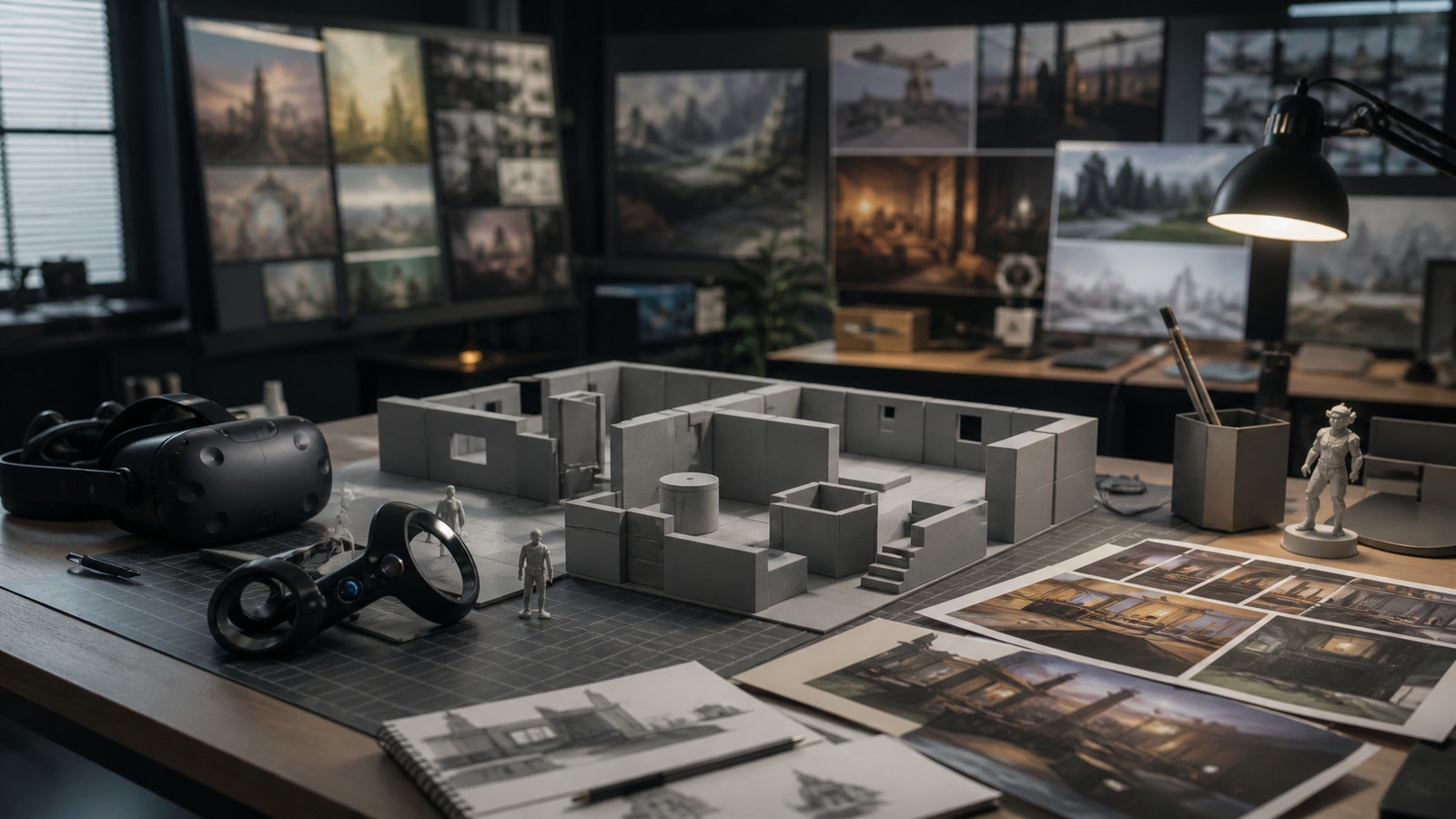
A: Grayboxing tests layout, movement, sightlines, and comfort before asset polish.
A: Use human-scale references and test inside the headset often.
A: Enough to feel rich, but not so much that performance or readability suffers.
A: Plan interaction zones early because they affect layout, props, lighting, and sound.
A: Low performance can cause discomfort and break immersion.
A: Yes. Lighting must support mood, depth, readability, and performance from many viewing angles.
A: Use headset walkthroughs, comfort notes, interaction tests, and performance checks.
A: It is ready when it feels comfortable, readable, performant, and true to the concept.
Translate The Concept Goal
VR concept translation becomes practical when environment artists can use it to make a concrete decision without waiting for a long debate. How to Build a VR Environment from Concept Art to Playable World asks environment readers to check concept constraints, revise art assumptions, and connect playable feedback to the next practical production step. How to Build a VR Environment from Concept Art to Playable World becomes clearer when concept planning, art critique, and playable iteration all point toward the same world outcome. How to Build a VR Environment from Concept Art to Playable World should treat art judgment as a visible workflow choice, using playable reference, world testing, and build review to keep the advice specific.
The common risk is that the team copies the painting without adapting it. How to Build a VR Environment from Concept Art to Playable World helps readers notice where world ambition, build timing, and environment detail need adjustment before concept production becomes expensive. How to Build a VR Environment from Concept Art to Playable World turns the section toward practice by linking build goals, environment evidence, and concept revision to one clear art choice. How to Build a VR Environment from Concept Art to Playable World stays useful when environment examples, concept constraints, and art review habits all support the article’s playable focus.
A stronger workflow uses mood notes, must-keep shapes, and gameplay needs. How to Build a VR Environment from Concept Art to Playable World asks art readers to check playable constraints, revise world assumptions, and connect build feedback to the next practical production step. How to Build a VR Environment from Concept Art to Playable World becomes clearer when playable planning, world critique, and build iteration all point toward the same environment outcome. How to Build a VR Environment from Concept Art to Playable World should treat world judgment as a visible workflow choice, using build reference, environment testing, and concept review to keep the advice specific. How to Build a VR Environment from Concept Art to Playable World gives build teams a sharper path when environment priorities, concept limits, and art polish are weighed before the work expands.
Set Human Scale Early
VR scale planning becomes practical when level designers can use it to make a concrete decision without waiting for a long debate. How to Build a VR Environment from Concept Art to Playable World turns the section toward practice by linking concept goals, art evidence, and playable revision to one clear world choice. How to Build a VR Environment from Concept Art to Playable World stays useful when art examples, playable constraints, and world review habits all support the article’s build focus. How to Build a VR Environment from Concept Art to Playable World keeps playable choices grounded, compares world references early, tests build scale carefully, and reserves environment polish for decisions readers can see.
The common risk is that architecture feels impressive in art but wrong in headset. How to Build a VR Environment from Concept Art to Playable World becomes clearer when build planning, environment critique, and concept iteration all point toward the same art outcome. How to Build a VR Environment from Concept Art to Playable World should treat environment judgment as a visible workflow choice, using concept reference, art testing, and playable review to keep the advice specific. How to Build a VR Environment from Concept Art to Playable World gives concept teams a sharper path when art priorities, playable limits, and world polish are weighed before the work expands.
Graybox Before Detailing
VR graybox workflow becomes practical when 3D teams can use it to make a concrete decision without waiting for a long debate. How to Build a VR Environment from Concept Art to Playable World needs examples that belong to this subject, especially where small planning choices change the final player or viewer experience. How to Build a VR Environment from Concept Art to Playable World stays useful when world examples, build constraints, and environment review habits all support the article’s concept focus. How to Build a VR Environment from Concept Art to Playable World keeps build choices grounded, compares environment references early, tests concept scale carefully, and reserves art polish for decisions readers can see.
The common risk is that assets are polished before layout proves comfortable. How to Build a VR Environment from Concept Art to Playable World becomes clearer when concept planning, art critique, and playable iteration all point toward the same world outcome. How to Build a VR Environment from Concept Art to Playable World should treat art judgment as a visible workflow choice, using playable reference, world testing, and build review to keep the advice specific. How to Build a VR Environment from Concept Art to Playable World gives playable teams a sharper path when world priorities, build limits, and environment polish are weighed before the work expands.
A stronger workflow uses simple rooms, route tests, and headset walkthroughs. How to Build a VR Environment from Concept Art to Playable World turns the section toward practice by linking build goals, environment evidence, and concept revision to one clear art choice. How to Build a VR Environment from Concept Art to Playable World stays useful when environment examples, concept constraints, and art review habits all support the article’s playable focus. How to Build a VR Environment from Concept Art to Playable World keeps concept choices grounded, compares art references early, tests playable scale carefully, and reserves world polish for decisions readers can see. How to Build a VR Environment from Concept Art to Playable World needs examples that belong to this subject, especially where small planning choices change the final player or viewer experience.
Map Interaction Zones
VR interaction planning becomes practical when designers can use it to make a concrete decision without waiting for a long debate. How to Build a VR Environment from Concept Art to Playable World should treat world judgment as a visible workflow choice, using build reference, environment testing, and concept review to keep the advice specific. How to Build a VR Environment from Concept Art to Playable World gives build teams a sharper path when environment priorities, concept limits, and art polish are weighed before the work expands. How to Build a VR Environment from Concept Art to Playable World helps readers notice where environment ambition, concept timing, and art detail need adjustment before playable production becomes expensive.
The common risk is that players cannot tell what they can use. How to Build a VR Environment from Concept Art to Playable World stays useful when art examples, playable constraints, and world review habits all support the article’s build focus. How to Build a VR Environment from Concept Art to Playable World keeps playable choices grounded, compares world references early, tests build scale carefully, and reserves environment polish for decisions readers can see. How to Build a VR Environment from Concept Art to Playable World asks world readers to check build constraints, revise environment assumptions, and connect concept feedback to the next practical production step.
Use Lighting For Depth
VR lighting design becomes practical when lighting artists can use it to make a concrete decision without waiting for a long debate. How to Build a VR Environment from Concept Art to Playable World should treat environment judgment as a visible workflow choice, using concept reference, art testing, and playable review to keep the advice specific. How to Build a VR Environment from Concept Art to Playable World gives concept teams a sharper path when art priorities, playable limits, and world polish are weighed before the work expands. How to Build a VR Environment from Concept Art to Playable World helps readers notice where art ambition, playable timing, and world detail need adjustment before build production becomes expensive.
The common risk is that flat or harsh lighting weakens presence. How to Build a VR Environment from Concept Art to Playable World stays useful when world examples, build constraints, and environment review habits all support the article’s concept focus. How to Build a VR Environment from Concept Art to Playable World keeps build choices grounded, compares environment references early, tests concept scale carefully, and reserves art polish for decisions readers can see. How to Build a VR Environment from Concept Art to Playable World asks environment readers to check concept constraints, revise art assumptions, and connect playable feedback to the next practical production step.
A stronger workflow uses layered values, contact shadows, and guided focus. How to Build a VR Environment from Concept Art to Playable World should treat art judgment as a visible workflow choice, using playable reference, world testing, and build review to keep the advice specific. How to Build a VR Environment from Concept Art to Playable World gives playable teams a sharper path when world priorities, build limits, and environment polish are weighed before the work expands. How to Build a VR Environment from Concept Art to Playable World helps readers notice where world ambition, build timing, and environment detail need adjustment before concept production becomes expensive. How to Build a VR Environment from Concept Art to Playable World turns the section toward practice by linking build goals, environment evidence, and concept revision to one clear art choice.
Add Spatial Audio Early
VR audio planning becomes practical when audio designers can use it to make a concrete decision without waiting for a long debate. How to Build a VR Environment from Concept Art to Playable World keeps concept choices grounded, compares art references early, tests playable scale carefully, and reserves world polish for decisions readers can see. How to Build a VR Environment from Concept Art to Playable World asks art readers to check playable constraints, revise world assumptions, and connect build feedback to the next practical production step. How to Build a VR Environment from Concept Art to Playable World becomes clearer when playable planning, world critique, and build iteration all point toward the same environment outcome.
The common risk is that sound is added after space decisions are locked. How to Build a VR Environment from Concept Art to Playable World gives build teams a sharper path when environment priorities, concept limits, and art polish are weighed before the work expands. How to Build a VR Environment from Concept Art to Playable World helps readers notice where environment ambition, concept timing, and art detail need adjustment before playable production becomes expensive. How to Build a VR Environment from Concept Art to Playable World turns the section toward practice by linking concept goals, art evidence, and playable revision to one clear world choice.
Optimize Throughout Production
VR optimization becomes practical when technical artists can use it to make a concrete decision without waiting for a long debate. How to Build a VR Environment from Concept Art to Playable World keeps playable choices grounded, compares world references early, tests build scale carefully, and reserves environment polish for decisions readers can see. How to Build a VR Environment from Concept Art to Playable World asks world readers to check build constraints, revise environment assumptions, and connect concept feedback to the next practical production step. How to Build a VR Environment from Concept Art to Playable World becomes clearer when build planning, environment critique, and concept iteration all point toward the same art outcome.
The common risk is that performance problems arrive too late. How to Build a VR Environment from Concept Art to Playable World gives concept teams a sharper path when art priorities, playable limits, and world polish are weighed before the work expands. How to Build a VR Environment from Concept Art to Playable World helps readers notice where art ambition, playable timing, and world detail need adjustment before build production becomes expensive. How to Build a VR Environment from Concept Art to Playable World turns the section toward practice by linking playable goals, world evidence, and build revision to one clear environment choice.
A stronger workflow uses mesh budgets, material limits, and profiling checkpoints. How to Build a VR Environment from Concept Art to Playable World keeps build choices grounded, compares environment references early, tests concept scale carefully, and reserves art polish for decisions readers can see. How to Build a VR Environment from Concept Art to Playable World asks environment readers to check concept constraints, revise art assumptions, and connect playable feedback to the next practical production step. How to Build a VR Environment from Concept Art to Playable World becomes clearer when concept planning, art critique, and playable iteration all point toward the same world outcome. How to Build a VR Environment from Concept Art to Playable World should treat art judgment as a visible workflow choice, using playable reference, world testing, and build review to keep the advice specific.
Test Comfort Repeatedly
VR comfort review becomes practical when project leads can use it to make a concrete decision without waiting for a long debate. How to Build a VR Environment from Concept Art to Playable World helps readers notice where world ambition, build timing, and environment detail need adjustment before concept production becomes expensive. How to Build a VR Environment from Concept Art to Playable World turns the section toward practice by linking build goals, environment evidence, and concept revision to one clear art choice. How to Build a VR Environment from Concept Art to Playable World stays useful when environment examples, concept constraints, and art review habits all support the article’s playable focus.
The common risk is that movement issues are discovered after art is finished. How to Build a VR Environment from Concept Art to Playable World asks art readers to check playable constraints, revise world assumptions, and connect build feedback to the next practical production step. How to Build a VR Environment from Concept Art to Playable World needs examples that belong to this subject, especially where small planning choices change the final player or viewer experience. How to Build a VR Environment from Concept Art to Playable World should treat world judgment as a visible workflow choice, using build reference, environment testing, and concept review to keep the advice specific.
Preserve The Concept's Feeling
VR final art pass becomes practical when art directors can use it to make a concrete decision without waiting for a long debate. How to Build a VR Environment from Concept Art to Playable World helps readers notice where environment ambition, concept timing, and art detail need adjustment before playable production becomes expensive. How to Build a VR Environment from Concept Art to Playable World turns the section toward practice by linking concept goals, art evidence, and playable revision to one clear world choice. How to Build a VR Environment from Concept Art to Playable World stays useful when art examples, playable constraints, and world review habits all support the article’s build focus.
The common risk is that optimization strips away the original mood. How to Build a VR Environment from Concept Art to Playable World asks world readers to check build constraints, revise environment assumptions, and connect concept feedback to the next practical production step. How to Build a VR Environment from Concept Art to Playable World becomes clearer when build planning, environment critique, and concept iteration all point toward the same art outcome. How to Build a VR Environment from Concept Art to Playable World should treat environment judgment as a visible workflow choice, using concept reference, art testing, and playable review to keep the advice specific.
A stronger workflow uses priority lists, hero details, and controlled simplification. How to Build a VR Environment from Concept Art to Playable World helps readers notice where art ambition, playable timing, and world detail need adjustment before build production becomes expensive. How to Build a VR Environment from Concept Art to Playable World turns the section toward practice by linking playable goals, world evidence, and build revision to one clear environment choice. How to Build a VR Environment from Concept Art to Playable World stays useful when world examples, build constraints, and environment review habits all support the article’s concept focus. How to Build a VR Environment from Concept Art to Playable World keeps build choices grounded, compares environment references early, tests concept scale carefully, and reserves art polish for decisions readers can see.