Building movie-accurate Star Wars helmets at home has become one of the most exciting DIY hobbies for sci-fi fans, cosplay creators, collectors, and makers in 2026. What once required professional prop studios and expensive fabrication equipment can now be achieved with affordable materials, creativity, and patience. Fans around the world are transforming foam sheets, plastic filament, paint, LEDs, and household tools into cinematic helmets worthy of display shelves, conventions, and fan films. The appeal of Star Wars helmets goes far beyond cosplay. These iconic designs instantly capture attention because they combine futuristic armor, military influence, battle damage, and unforgettable silhouettes. Whether inspired by mysterious bounty hunters, elite troopers, or legendary galactic warriors, these helmets have become symbols of craftsmanship and fandom. For many builders, creating one at home is both a technical challenge and a personal creative achievement.
A: Yes, foam is affordable, lightweight, and easy to shape.
A: No, many amazing helmets are built entirely from foam.
A: It smooths surfaces and improves realism dramatically.
A: Through layered paint, scratches, washes, and dry brushing.
A: Yes, LEDs, fans, and voice systems are very common.
A: Acrylic and airbrush paints are popular choices.
A: Yes, especially lightweight foam builds with proper padding.
A: Achieving clean symmetry and smooth finishing work.
A: Simple builds may take days, while advanced projects can take weeks.
A: Precise proportions, realistic paint, weathering, and fine details.
Why Star Wars Helmets Are So Popular
Few movie props are as instantly recognizable as Star Wars helmets. Their designs balance realism and fantasy in a way that feels timeless. Sharp visors, worn paint, mechanical breathing systems, battle scars, and sleek armor plating all contribute to their cinematic appeal.
Fans also love the variety of helmet styles found throughout the Star Wars universe. Some helmets look clean and military-inspired, while others appear rugged, ancient, or heavily weathered from years of galactic combat. This diversity allows builders to choose projects that match their skill level and creative interests.
Choosing the Right Helmet Build
Before starting a build, it helps to decide what type of helmet best matches your experience level and workspace. Some designs are relatively simple and symmetrical, while others include layered armor sections, complex curves, or moving components. Beginners often start with foam-based builds because they are inexpensive and forgiving. More advanced builders may choose 3D printing for sharper details and greater screen accuracy. The best first project is usually one that feels exciting but still manageable.
Foam Builds vs. 3D Printing
EVA foam remains one of the most beginner-friendly materials for homemade Star Wars helmets. It is lightweight, affordable, easy to cut, and simple to shape with a heat gun. Foam also works well for wearable helmets because it is comfortable during conventions and easier to transport.
3D printing offers greater precision and detail, making it popular for highly accurate replicas. Printed helmets often require extensive sanding, filling, and finishing, but they can achieve incredible realism when completed properly. Many builders eventually combine both methods, using printed parts alongside foam details and electronics.
Finding Templates and Files
One reason homemade prop building has exploded in popularity is the availability of downloadable templates and digital files. Fans can now access printable patterns, foam templates, and 3D models from online communities dedicated to cosplay and prop making. Templates save time and help beginners achieve better proportions. Instead of sculpting every shape from scratch, builders can focus on assembly, finishing, and personalization. Many creators still customize their builds with additional battle damage, alternate colors, or unique weathering techniques to make each helmet feel original.
Building the Helmet Structure
The structural stage is where the helmet begins to take shape. Foam builders typically cut pattern pieces carefully before heat shaping and gluing them together. Printed builds require assembly of multiple sections, often using adhesives and internal supports.
Symmetry is one of the most important parts of helmet construction. Slight alignment issues can dramatically affect the final look. Builders often work slowly during this stage, checking proportions repeatedly before moving to paint and detailing.
Sanding and Surface Preparation
One of the biggest differences between amateur-looking props and cinematic replicas is surface preparation. Rough seams, visible print lines, and uneven textures can ruin realism if ignored. Sanding becomes one of the most important stages of the build. Builders often use filler, sanding blocks, rotary tools, and primer layers to smooth surfaces before painting. Foam builders also seal their materials before applying paint to create cleaner finishes. While sanding can feel repetitive, it dramatically improves the final appearance.
Painting for Movie Accuracy
Paint transforms a basic helmet shell into something that feels screen-ready. Most builders start with primer before layering metallics, base colors, shading, and weathering. Airbrushing has become especially popular because it creates smooth cinematic transitions and realistic gradients.
Movie-accurate paint jobs rarely look perfectly clean. Even freshly painted helmets often include subtle scuffs, faded sections, and tonal variation. Builders who study reference images carefully tend to create the most convincing replicas.
Weathering and Battle Damage
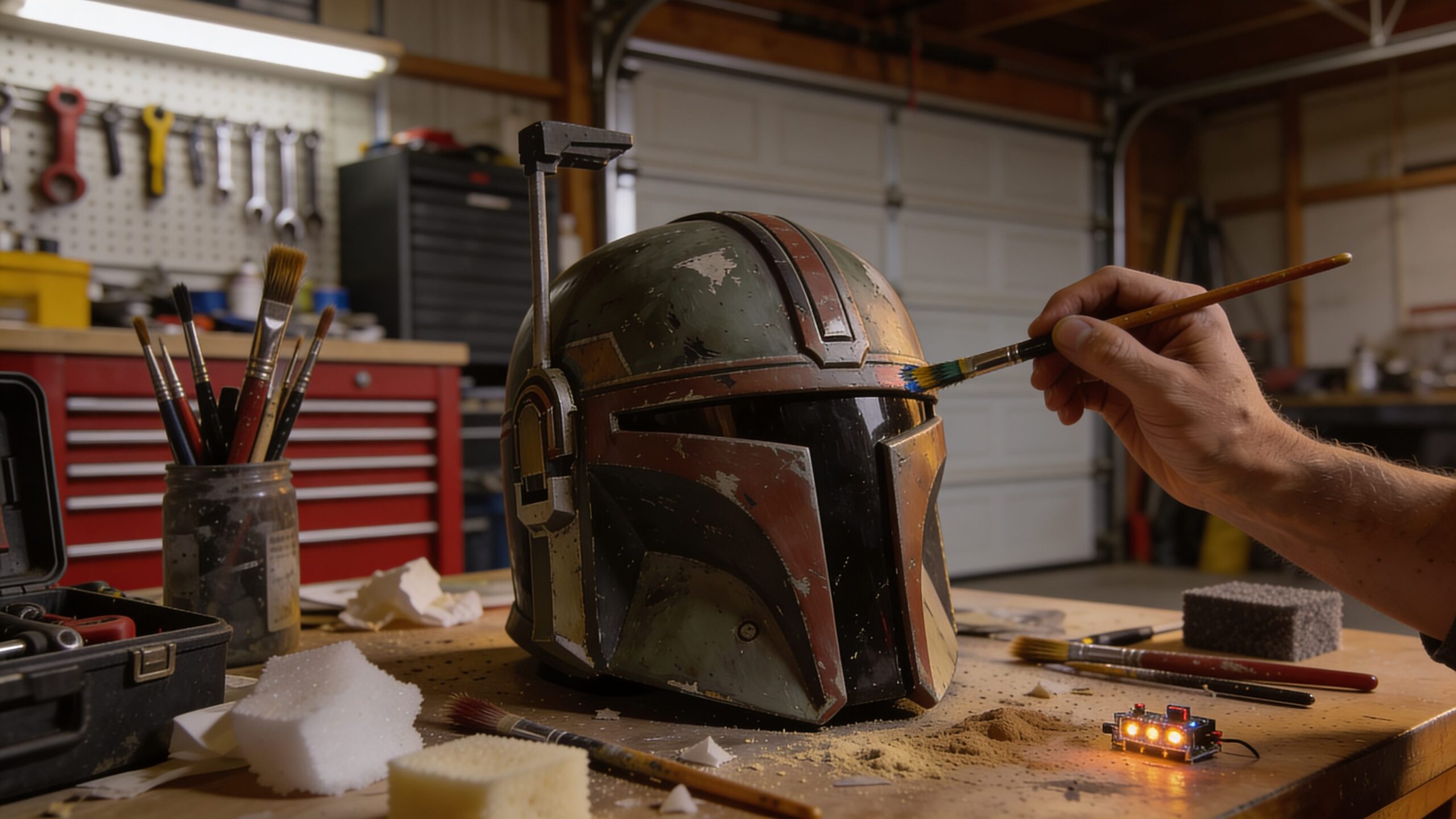
Weathering is one of the most satisfying stages of building a Star Wars helmet. Tiny scratches, chipped paint, dirt washes, burn marks, and metallic edge wear instantly make a prop feel believable. Without weathering, many helmets appear too toy-like or artificial. The best weathering tells a visual story. A dented edge might suggest combat damage, while faded paint may imply years of harsh planetary conditions. Builders often layer multiple weathering techniques to create depth and realism.
Visors and Helmet Lenses
Visors play a major role in the realism of a helmet. Dark tinted acrylic, vacuum-formed plastic, and flexible visor sheets are commonly used to achieve cinematic looks while maintaining visibility.
Proper visor installation also improves comfort and wearability. Builders often use foam padding, magnets, or hidden fasteners to secure visors cleanly without visible hardware disrupting the design.
Adding Electronics and LEDs
Modern Star Wars helmet builds frequently include electronics to enhance realism. Small LED systems can create glowing targeting displays, illuminated rangefinders, breathing effects, or internal lighting accents. Many builders use rechargeable batteries and compact controllers hidden inside the helmet. Some even add fans for airflow or voice amplification systems for conventions and filming projects. Electronics make a build feel interactive and alive.
Comfort and Wearability
A movie-accurate helmet may look incredible, but it still needs to fit properly if it will be worn. Padding, ventilation, chin support, and balanced weight distribution all improve comfort during long events.
Builders often customize interiors using soft foam inserts and adjustable straps. These hidden details are rarely visible from the outside, but they make a huge difference when wearing the helmet for hours at a convention or photoshoot.
Homemade Workshop Setups
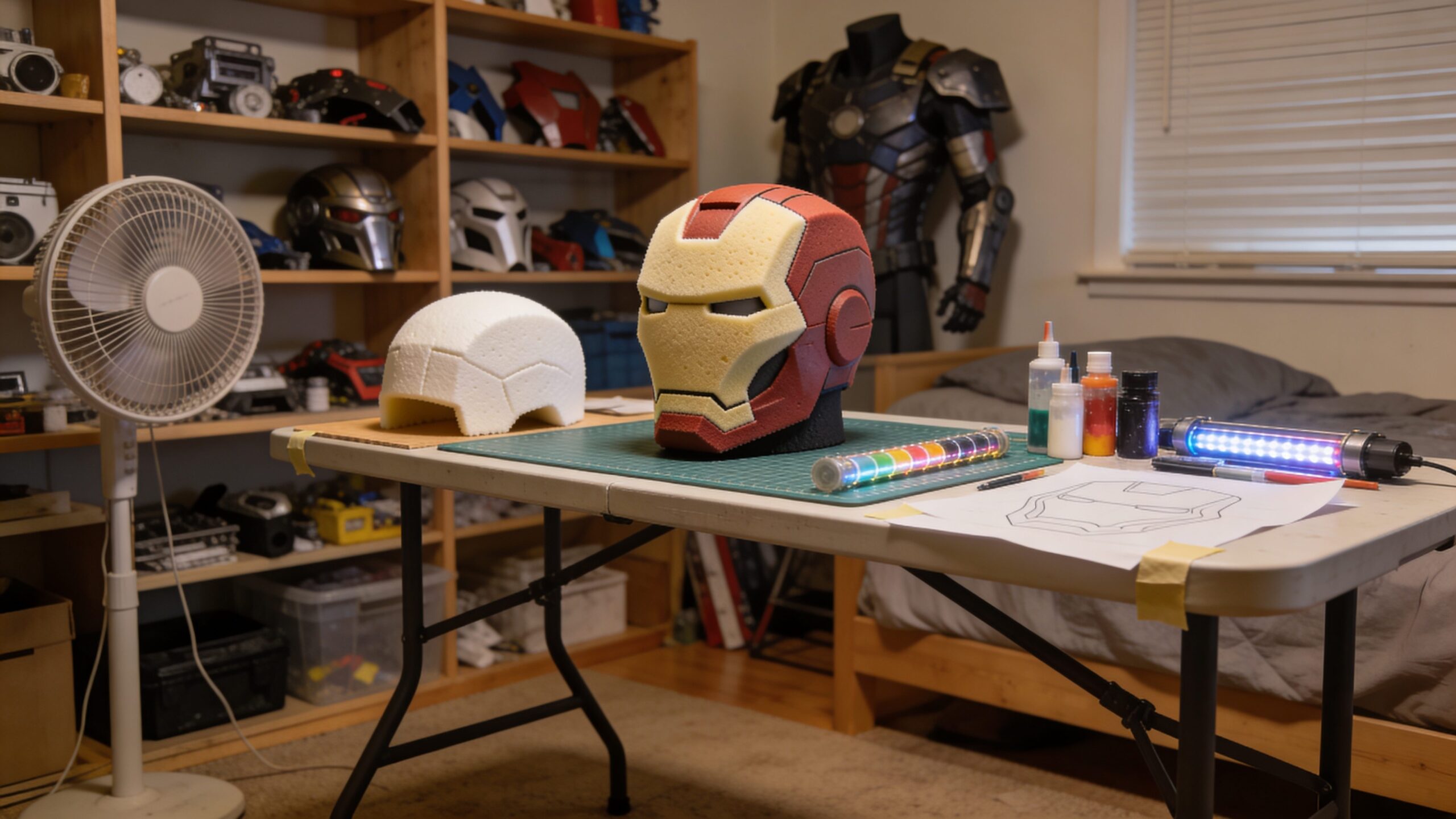
One of the most inspiring parts of the hobby is that many incredible helmets are built in ordinary spaces. Small garages, bedrooms, kitchens, basements, and hobby corners regularly produce cinematic-quality props. A simple workspace with good lighting, basic tools, and organized materials is usually enough to start building. Creativity and patience matter far more than expensive equipment. Many skilled builders began with little more than foam sheets, glue, and paint.
The Importance of Reference Images
Movie-accurate builds rely heavily on reference images. Builders often study screenshots, behind-the-scenes footage, prop replicas, and fan communities to understand shapes, colors, proportions, and weathering patterns.
Even small details can dramatically affect accuracy. Tiny paint scratches, visor angles, vent placement, and surface textures all contribute to the illusion that the helmet belongs in the Star Wars universe.
Convention Displays and Cosplay
Finished helmets often become convention centerpieces. Some builders create full costumes around their helmets, while others display them on shelves, stands, or illuminated collector walls. A detailed helmet instantly attracts attention because it combines craftsmanship with nostalgia. Photography also plays a major role in the hobby. Cinematic lighting, fog effects, desert landscapes, forests, and industrial backgrounds help homemade helmets look like professional movie props during photoshoots.
Why Fans Love Building Helmets
Building a Star Wars helmet is more than just making a prop. It allows fans to participate directly in a universe they admire. Every sanding session, paint layer, weathered scratch, and glowing light becomes part of a larger creative journey.
The process teaches patience, problem-solving, and artistic skills while also creating something deeply personal. Many builders say the most rewarding moment comes when the helmet finally feels real for the first time.
Beginner Mistakes to Avoid
New builders often rush through sanding, painting, or assembly because they are excited to see the finished result. However, skipping preparation steps usually reduces realism. Surface cleanup and careful painting are what separate professional-looking builds from unfinished projects. Another common mistake is over-weathering. Too much damage can make a helmet look messy rather than cinematic. Controlled subtlety usually creates the best final effect.
The Future of DIY Star Wars Props
The future of homemade Star Wars helmet building looks more exciting than ever. Affordable resin printers, improved flexible materials, compact electronics, and advanced painting systems continue to make fan builds more realistic and accessible.
At the same time, the heart of the hobby remains unchanged. Fans still love creating physical objects inspired by stories that captured their imagination. Technology simply gives them more tools to bring those ideas into reality.
Final Thoughts
Building movie-accurate Star Wars helmets at home is one of the most rewarding DIY projects for sci-fi fans in 2026. From foam crafting and 3D printing to weathering and LED effects, the hobby combines creativity, engineering, artistry, and fandom into one unforgettable experience. Whether you are building your first wearable helmet or creating a cinematic display piece for your collection, the process is filled with excitement and discovery. With patience, practice, and imagination, almost any fan can transform simple materials into something that feels truly legendary.