A Good Sculpting Workflow Moves In Layers
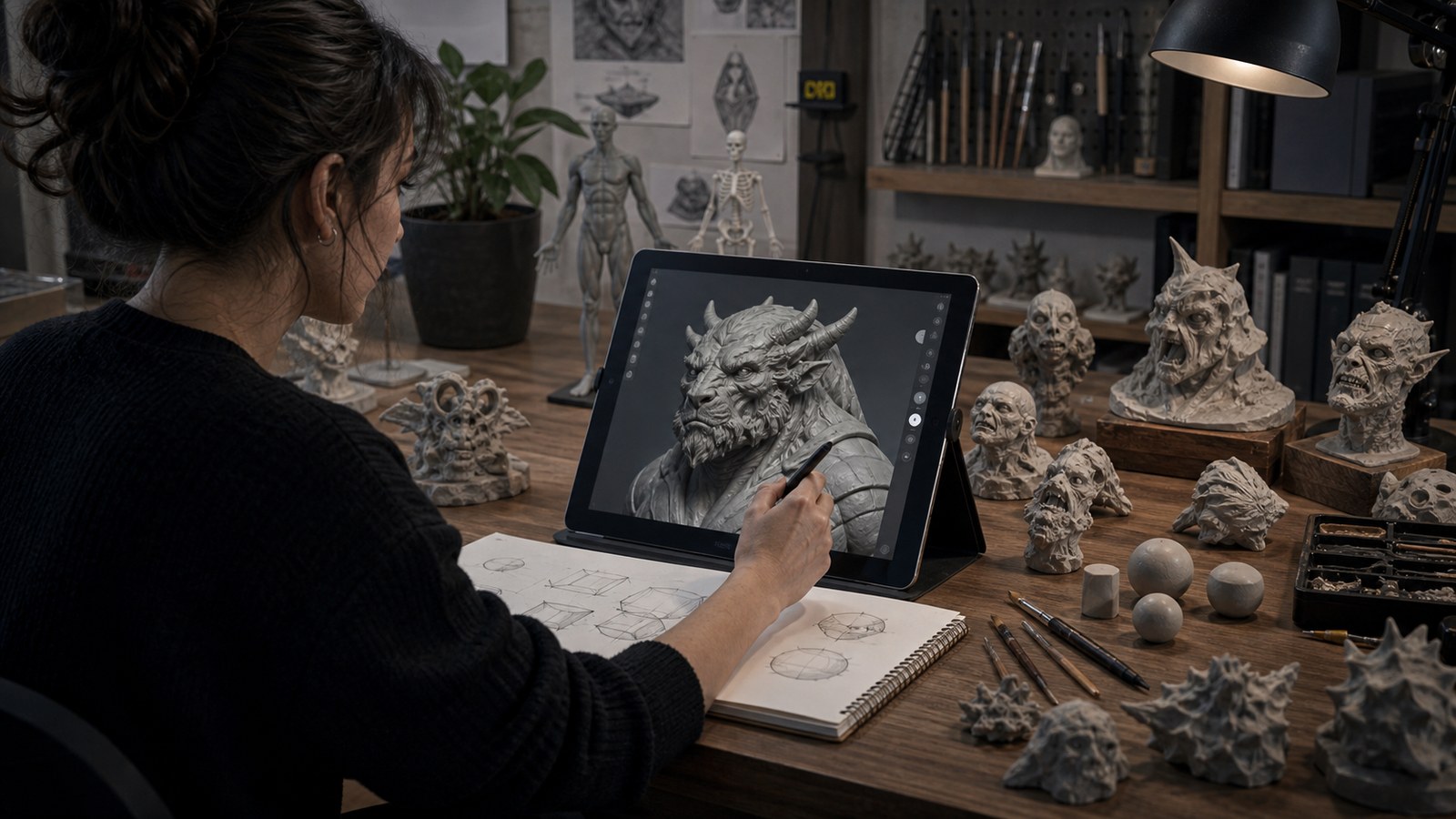
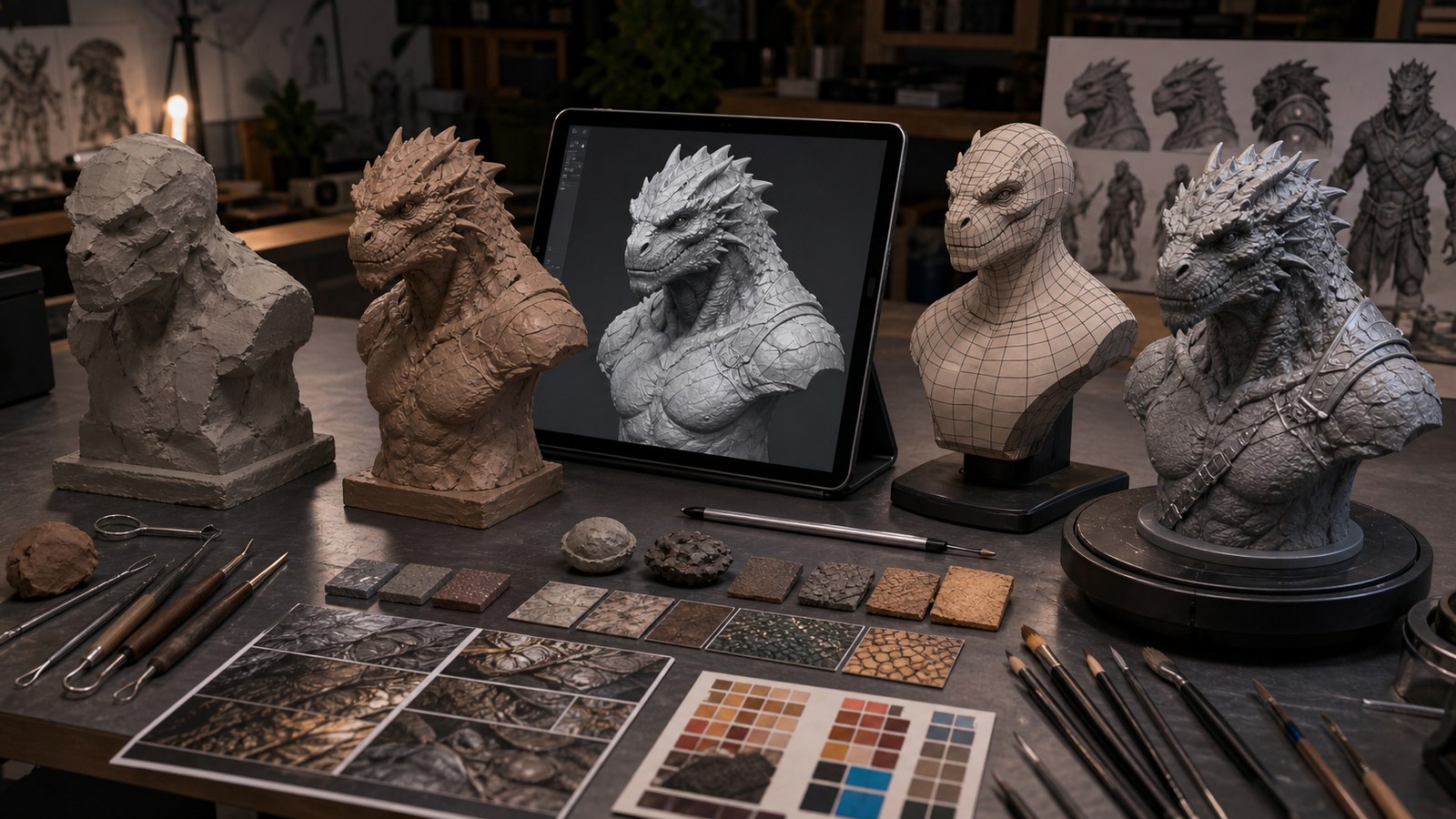
A 3D sculpting workflow from start to finish is less about one perfect sequence and more about solving the right problems in the right order. Reference comes before invention. Blockout comes before anatomy polish. Primary forms come before secondary forms. Detail comes after the model can survive a distance check. Retopology, UVs, materials, rendering, and presentation all depend on what the sculpt is meant to become. A creature concept, collectible statue, game character, cinematic asset, and 3D print model may share early sculpting habits but diverge later in the pipeline. Beginners often struggle because they jump between stages: a little detail, a little proportion repair, a little rendering, then back to anatomy. A layered workflow keeps the artist oriented. Each pass has a purpose, and each purpose makes the next pass easier.
A: It is the sequence of planning, sculpting, refining, preparing, and presenting a 3D model.
A: Start with the asset purpose, references, and a simple blockout.
A: Add details after the primary and secondary forms are working.
A: It depends on whether the model needs animation, games, clean UVs, or production handoff.
A: A blockout is a rough version that establishes proportion, pose, silhouette, and major masses.
A: Materials help presentation and can reveal whether forms and surfaces are convincing.
A: Final rendering happens late, but preview lighting can help evaluate forms earlier.
A: Enough to check the model from distance, rotation, reference, and final-use perspectives.
A: Unclear goals, early detail, weak file organization, and skipped comparison slow progress.
A: Keep projects small, define stages, save versions, and stop adding detail when the goal is met.
Define The Asset's Final Use
Sculpting workflow planning matters because 3D artists need a way to judge the work before polish hides the structure. A sculpt, render, or lighting setup can look busy and still fail at the basic level of form, readability, or mood. The first question is not whether the result has enough features. It is whether the main idea can be understood quickly and improved deliberately. That question keeps the artist focused on decisions that survive beyond a close-up view.
The common risk is that the model is built without knowing its destination. Beginners often experience this as confusion rather than a single obvious mistake. They add more strokes, settings, lights, or materials because adding feels productive. The work becomes heavier, but the underlying problem remains. A good workflow slows that reaction down and asks what layer actually needs attention. Sometimes the best next step is removing detail, simplifying the light, or returning to reference.
A stronger habit uses briefs, platform needs, and output decisions. This creates evidence instead of guesswork. It lets the artist compare the work to reference, test it at the right scale, and decide whether the next pass should change proportion, surface quality, topology, material, camera, or light. The process becomes calmer because each pass has a purpose. It also makes critique more useful because reviewers can respond to the current stage instead of asking for everything at once.
Gather Reference With Categories
Reference for sculpting matters because creature and character artists need a way to judge the work before polish hides the structure. A sculpt, render, or lighting setup can look busy and still fail at the basic level of form, readability, or mood. The first question is not whether the result has enough features. It is whether the main idea can be understood quickly and improved deliberately. That question keeps the artist focused on decisions that survive beyond a close-up view.
The common risk is that reference becomes a mood pile instead of a guide. Beginners often experience this as confusion rather than a single obvious mistake. They add more strokes, settings, lights, or materials because adding feels productive. The work becomes heavier, but the underlying problem remains. A good workflow slows that reaction down and asks what layer actually needs attention. Sometimes the best next step is removing detail, simplifying the light, or returning to reference.
Block Out With Simple Masses
The sculpting blockout matters because beginners and students need a way to judge the work before polish hides the structure. A sculpt, render, or lighting setup can look busy and still fail at the basic level of form, readability, or mood. The first question is not whether the result has enough features. It is whether the main idea can be understood quickly and improved deliberately. That question keeps the artist focused on decisions that survive beyond a close-up view.
The common risk is that detail hides proportion mistakes. Beginners often experience this as confusion rather than a single obvious mistake. They add more strokes, settings, lights, or materials because adding feels productive. The work becomes heavier, but the underlying problem remains. A good workflow slows that reaction down and asks what layer actually needs attention. Sometimes the best next step is removing detail, simplifying the light, or returning to reference.
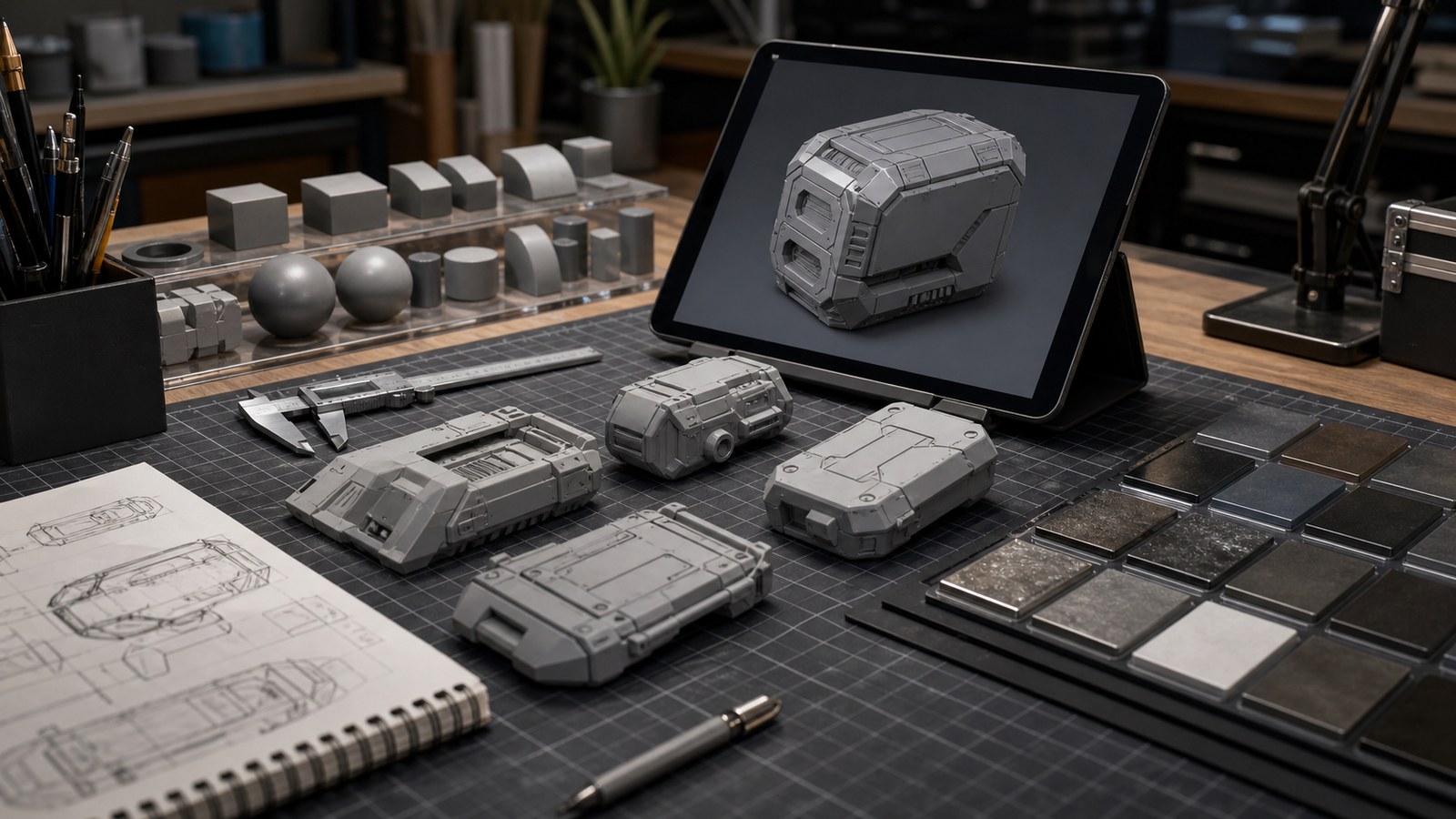
A stronger habit uses primitive forms, silhouette tests, and big brushes. This creates evidence instead of guesswork. It lets the artist compare the work to reference, test it at the right scale, and decide whether the next pass should change proportion, surface quality, topology, material, camera, or light. The process becomes calmer because each pass has a purpose. It also makes critique more useful because reviewers can respond to the current stage instead of asking for everything at once.
Refine Secondary Forms
Middle sculpting stages matters because artists developing a model need a way to judge the work before polish hides the structure. A sculpt, render, or lighting setup can look busy and still fail at the basic level of form, readability, or mood. The first question is not whether the result has enough features. It is whether the main idea can be understood quickly and improved deliberately. That question keeps the artist focused on decisions that survive beyond a close-up view.
The common risk is that the sculpt jumps from rough to noisy. Beginners often experience this as confusion rather than a single obvious mistake. They add more strokes, settings, lights, or materials because adding feels productive. The work becomes heavier, but the underlying problem remains. A good workflow slows that reaction down and asks what layer actually needs attention. Sometimes the best next step is removing detail, simplifying the light, or returning to reference.
Add Detail With Hierarchy
Detail passes matters because digital sculptors need a way to judge the work before polish hides the structure. A sculpt, render, or lighting setup can look busy and still fail at the basic level of form, readability, or mood. The first question is not whether the result has enough features. It is whether the main idea can be understood quickly and improved deliberately. That question keeps the artist focused on decisions that survive beyond a close-up view.
The common risk is that every surface receives equal attention. Beginners often experience this as confusion rather than a single obvious mistake. They add more strokes, settings, lights, or materials because adding feels productive. The work becomes heavier, but the underlying problem remains. A good workflow slows that reaction down and asks what layer actually needs attention. Sometimes the best next step is removing detail, simplifying the light, or returning to reference.
A stronger habit uses large, medium, and small detail layers. This creates evidence instead of guesswork. It lets the artist compare the work to reference, test it at the right scale, and decide whether the next pass should change proportion, surface quality, topology, material, camera, or light. The process becomes calmer because each pass has a purpose. It also makes critique more useful because reviewers can respond to the current stage instead of asking for everything at once.
Prepare For The Next Pipeline Step
Retopology and handoff matters because production artists need a way to judge the work before polish hides the structure. A sculpt, render, or lighting setup can look busy and still fail at the basic level of form, readability, or mood. The first question is not whether the result has enough features. It is whether the main idea can be understood quickly and improved deliberately. That question keeps the artist focused on decisions that survive beyond a close-up view.
The common risk is that a beautiful sculpt cannot be used downstream. Beginners often experience this as confusion rather than a single obvious mistake. They add more strokes, settings, lights, or materials because adding feels productive. The work becomes heavier, but the underlying problem remains. A good workflow slows that reaction down and asks what layer actually needs attention. Sometimes the best next step is removing detail, simplifying the light, or returning to reference.
Use Materials To Test Believability
Material preview in sculpting matters because artists presenting sculpts need a way to judge the work before polish hides the structure. A sculpt, render, or lighting setup can look busy and still fail at the basic level of form, readability, or mood. The first question is not whether the result has enough features. It is whether the main idea can be understood quickly and improved deliberately. That question keeps the artist focused on decisions that survive beyond a close-up view.
The common risk is that gray forms hide surface problems. Beginners often experience this as confusion rather than a single obvious mistake. They add more strokes, settings, lights, or materials because adding feels productive. The work becomes heavier, but the underlying problem remains. A good workflow slows that reaction down and asks what layer actually needs attention. Sometimes the best next step is removing detail, simplifying the light, or returning to reference.
A stronger habit uses rough shaders, texture references, and light tests. This creates evidence instead of guesswork. It lets the artist compare the work to reference, test it at the right scale, and decide whether the next pass should change proportion, surface quality, topology, material, camera, or light. The process becomes calmer because each pass has a purpose. It also makes critique more useful because reviewers can respond to the current stage instead of asking for everything at once.
Render For Communication
Final sculpt presentation matters because portfolio builders need a way to judge the work before polish hides the structure. A sculpt, render, or lighting setup can look busy and still fail at the basic level of form, readability, or mood. The first question is not whether the result has enough features. It is whether the main idea can be understood quickly and improved deliberately. That question keeps the artist focused on decisions that survive beyond a close-up view.
The common risk is that the finished sculpt is hard to evaluate. Beginners often experience this as confusion rather than a single obvious mistake. They add more strokes, settings, lights, or materials because adding feels productive. The work becomes heavier, but the underlying problem remains. A good workflow slows that reaction down and asks what layer actually needs attention. Sometimes the best next step is removing detail, simplifying the light, or returning to reference.
Review Before Calling It Done
Final sculpting review matters because artists finishing work need a way to judge the work before polish hides the structure. A sculpt, render, or lighting setup can look busy and still fail at the basic level of form, readability, or mood. The first question is not whether the result has enough features. It is whether the main idea can be understood quickly and improved deliberately. That question keeps the artist focused on decisions that survive beyond a close-up view.
The common risk is that fatigue makes flaws invisible. Beginners often experience this as confusion rather than a single obvious mistake. They add more strokes, settings, lights, or materials because adding feels productive. The work becomes heavier, but the underlying problem remains. A good workflow slows that reaction down and asks what layer actually needs attention. Sometimes the best next step is removing detail, simplifying the light, or returning to reference.
A stronger habit uses fresh eyes, mirrored views, and reference comparison. This creates evidence instead of guesswork. It lets the artist compare the work to reference, test it at the right scale, and decide whether the next pass should change proportion, surface quality, topology, material, camera, or light. The process becomes calmer because each pass has a purpose. It also makes critique more useful because reviewers can respond to the current stage instead of asking for everything at once.