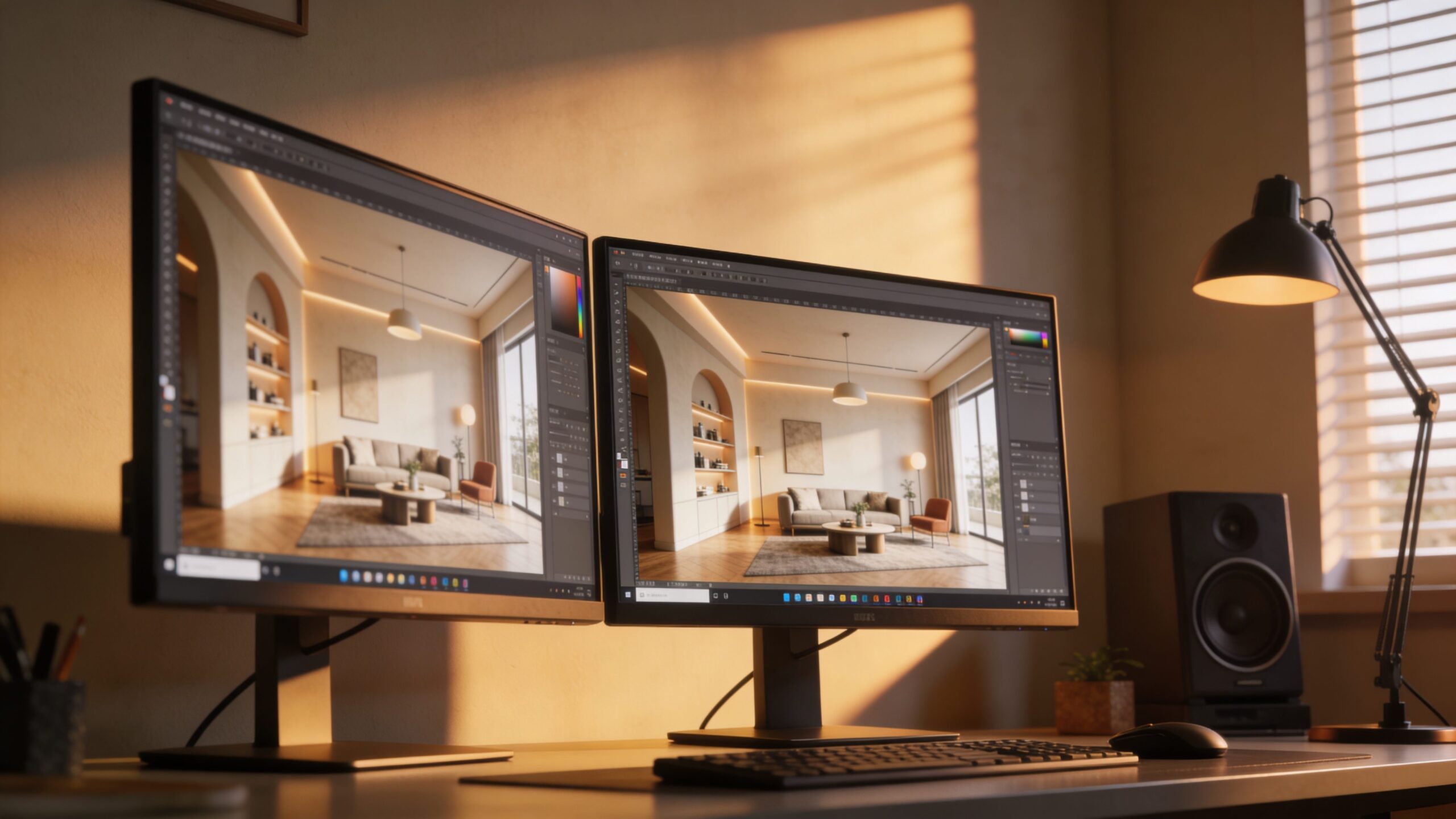
Photorealism Comes From Consistent Evidence
3D rendering creates photorealistic images by making many small decisions agree with the real world. Light needs believable direction, softness, color, and intensity. Materials need roughness, reflection, texture scale, and surface imperfections. Cameras need lens behavior, framing, exposure, and depth of field that feel plausible. Objects need correct scale, contact shadows, and enough variation to avoid looking synthetic. Beginners often think photorealism comes from one magic render setting, but it usually comes from consistency across lighting, materials, geometry, camera, color management, sampling, and reference. A render can be technically high quality and still feel fake if one part breaks the illusion. The goal is not to copy reality perfectly. It is to give the viewer enough visual evidence that the image feels physically possible.
A: It is the process of generating a 2D image from a 3D scene using lights, materials, cameras, and render settings.
A: Consistent lighting, scale, materials, camera behavior, and surface detail make a render feel real.
A: No. Settings help, but realism mostly comes from scene construction and observation.
A: Wrong scale breaks shadows, textures, camera feel, and object relationships.
A: Lighting is crucial because it reveals form, material, mood, and physical believability.
A: Physically based rendering materials use properties like roughness and metallic response to behave plausibly.
A: Reference shows how light, materials, imperfections, and camera behavior actually look.
A: Color management controls how rendered light and color are transformed for display.
A: It can improve presentation, but it cannot fully repair bad lighting, scale, or materials.
A: Simple still lifes, product props, interiors, and material studies are good starting points.
Start With Real Reference
Photoreal rendering reference matters because 3D artists need a way to judge the work before polish hides the structure. A sculpt, render, or lighting setup can look busy and still fail at the basic level of form, readability, or mood. The first question is not whether the result has enough features. It is whether the main idea can be understood quickly and improved deliberately. That question keeps the artist focused on decisions that survive beyond a close-up view.
The common risk is that the image is built from memory instead of observation. Beginners often experience this as confusion rather than a single obvious mistake. They add more strokes, settings, lights, or materials because adding feels productive. The work becomes heavier, but the underlying problem remains. A good workflow slows that reaction down and asks what layer actually needs attention. Sometimes the best next step is removing detail, simplifying the light, or returning to reference.
A stronger habit uses photo studies, material samples, and lighting notes. This creates evidence instead of guesswork. It lets the artist compare the work to reference, test it at the right scale, and decide whether the next pass should change proportion, surface quality, topology, material, camera, or light. The process becomes calmer because each pass has a purpose. It also makes critique more useful because reviewers can respond to the current stage instead of asking for everything at once.
Make Scale Physically Plausible
Scale in 3D rendering matters because beginner render artists need a way to judge the work before polish hides the structure. A sculpt, render, or lighting setup can look busy and still fail at the basic level of form, readability, or mood. The first question is not whether the result has enough features. It is whether the main idea can be understood quickly and improved deliberately. That question keeps the artist focused on decisions that survive beyond a close-up view.
The common risk is that objects feel like toys or composites. Beginners often experience this as confusion rather than a single obvious mistake. They add more strokes, settings, lights, or materials because adding feels productive. The work becomes heavier, but the underlying problem remains. A good workflow slows that reaction down and asks what layer actually needs attention. Sometimes the best next step is removing detail, simplifying the light, or returning to reference.
Light The Scene Like A Photographer
Rendering light setup matters because artists chasing realism need a way to judge the work before polish hides the structure. A sculpt, render, or lighting setup can look busy and still fail at the basic level of form, readability, or mood. The first question is not whether the result has enough features. It is whether the main idea can be understood quickly and improved deliberately. That question keeps the artist focused on decisions that survive beyond a close-up view.
The common risk is that lights are added randomly until the image is bright. Beginners often experience this as confusion rather than a single obvious mistake. They add more strokes, settings, lights, or materials because adding feels productive. The work becomes heavier, but the underlying problem remains. A good workflow slows that reaction down and asks what layer actually needs attention. Sometimes the best next step is removing detail, simplifying the light, or returning to reference.
A stronger habit uses key lights, fill, bounce, and shadow study. This creates evidence instead of guesswork. It lets the artist compare the work to reference, test it at the right scale, and decide whether the next pass should change proportion, surface quality, topology, material, camera, or light. The process becomes calmer because each pass has a purpose. It also makes critique more useful because reviewers can respond to the current stage instead of asking for everything at once.
Build Materials From Properties
Photoreal materials matters because look-development artists need a way to judge the work before polish hides the structure. A sculpt, render, or lighting setup can look busy and still fail at the basic level of form, readability, or mood. The first question is not whether the result has enough features. It is whether the main idea can be understood quickly and improved deliberately. That question keeps the artist focused on decisions that survive beyond a close-up view.
The common risk is that textures look decorative instead of physical. Beginners often experience this as confusion rather than a single obvious mistake. They add more strokes, settings, lights, or materials because adding feels productive. The work becomes heavier, but the underlying problem remains. A good workflow slows that reaction down and asks what layer actually needs attention. Sometimes the best next step is removing detail, simplifying the light, or returning to reference.
Use The Camera Deliberately
Camera settings in 3D rendering matters because visual artists need a way to judge the work before polish hides the structure. A sculpt, render, or lighting setup can look busy and still fail at the basic level of form, readability, or mood. The first question is not whether the result has enough features. It is whether the main idea can be understood quickly and improved deliberately. That question keeps the artist focused on decisions that survive beyond a close-up view.
The common risk is that the render feels like a viewport screenshot. Beginners often experience this as confusion rather than a single obvious mistake. They add more strokes, settings, lights, or materials because adding feels productive. The work becomes heavier, but the underlying problem remains. A good workflow slows that reaction down and asks what layer actually needs attention. Sometimes the best next step is removing detail, simplifying the light, or returning to reference.
A stronger habit uses focal length, exposure, depth of field, and composition. This creates evidence instead of guesswork. It lets the artist compare the work to reference, test it at the right scale, and decide whether the next pass should change proportion, surface quality, topology, material, camera, or light. The process becomes calmer because each pass has a purpose. It also makes critique more useful because reviewers can respond to the current stage instead of asking for everything at once.
Protect Contact And Occlusion
Grounding objects in renders matters because scene builders need a way to judge the work before polish hides the structure. A sculpt, render, or lighting setup can look busy and still fail at the basic level of form, readability, or mood. The first question is not whether the result has enough features. It is whether the main idea can be understood quickly and improved deliberately. That question keeps the artist focused on decisions that survive beyond a close-up view.
The common risk is that objects appear to float or paste onto the scene. Beginners often experience this as confusion rather than a single obvious mistake. They add more strokes, settings, lights, or materials because adding feels productive. The work becomes heavier, but the underlying problem remains. A good workflow slows that reaction down and asks what layer actually needs attention. Sometimes the best next step is removing detail, simplifying the light, or returning to reference.
Sample Enough For The Image
Render quality settings matters because artists balancing speed need a way to judge the work before polish hides the structure. A sculpt, render, or lighting setup can look busy and still fail at the basic level of form, readability, or mood. The first question is not whether the result has enough features. It is whether the main idea can be understood quickly and improved deliberately. That question keeps the artist focused on decisions that survive beyond a close-up view.
The common risk is that noise or over-rendering wastes time. Beginners often experience this as confusion rather than a single obvious mistake. They add more strokes, settings, lights, or materials because adding feels productive. The work becomes heavier, but the underlying problem remains. A good workflow slows that reaction down and asks what layer actually needs attention. Sometimes the best next step is removing detail, simplifying the light, or returning to reference.
A stronger habit uses sample tests, denoising, and region renders. This creates evidence instead of guesswork. It lets the artist compare the work to reference, test it at the right scale, and decide whether the next pass should change proportion, surface quality, topology, material, camera, or light. The process becomes calmer because each pass has a purpose. It also makes critique more useful because reviewers can respond to the current stage instead of asking for everything at once.
Use Color Management Early
Color workflow matters because rendering beginners need a way to judge the work before polish hides the structure. A sculpt, render, or lighting setup can look busy and still fail at the basic level of form, readability, or mood. The first question is not whether the result has enough features. It is whether the main idea can be understood quickly and improved deliberately. That question keeps the artist focused on decisions that survive beyond a close-up view.
The common risk is that the final image looks washed out or overly harsh. Beginners often experience this as confusion rather than a single obvious mistake. They add more strokes, settings, lights, or materials because adding feels productive. The work becomes heavier, but the underlying problem remains. A good workflow slows that reaction down and asks what layer actually needs attention. Sometimes the best next step is removing detail, simplifying the light, or returning to reference.
Polish Without Breaking Reality
Post-processing renders matters because artists finishing images need a way to judge the work before polish hides the structure. A sculpt, render, or lighting setup can look busy and still fail at the basic level of form, readability, or mood. The first question is not whether the result has enough features. It is whether the main idea can be understood quickly and improved deliberately. That question keeps the artist focused on decisions that survive beyond a close-up view.
The common risk is that effects hide problems or make realism collapse. Beginners often experience this as confusion rather than a single obvious mistake. They add more strokes, settings, lights, or materials because adding feels productive. The work becomes heavier, but the underlying problem remains. A good workflow slows that reaction down and asks what layer actually needs attention. Sometimes the best next step is removing detail, simplifying the light, or returning to reference.
A stronger habit uses subtle grading, bloom restraint, and reference comparison. This creates evidence instead of guesswork. It lets the artist compare the work to reference, test it at the right scale, and decide whether the next pass should change proportion, surface quality, topology, material, camera, or light. The process becomes calmer because each pass has a purpose. It also makes critique more useful because reviewers can respond to the current stage instead of asking for everything at once.