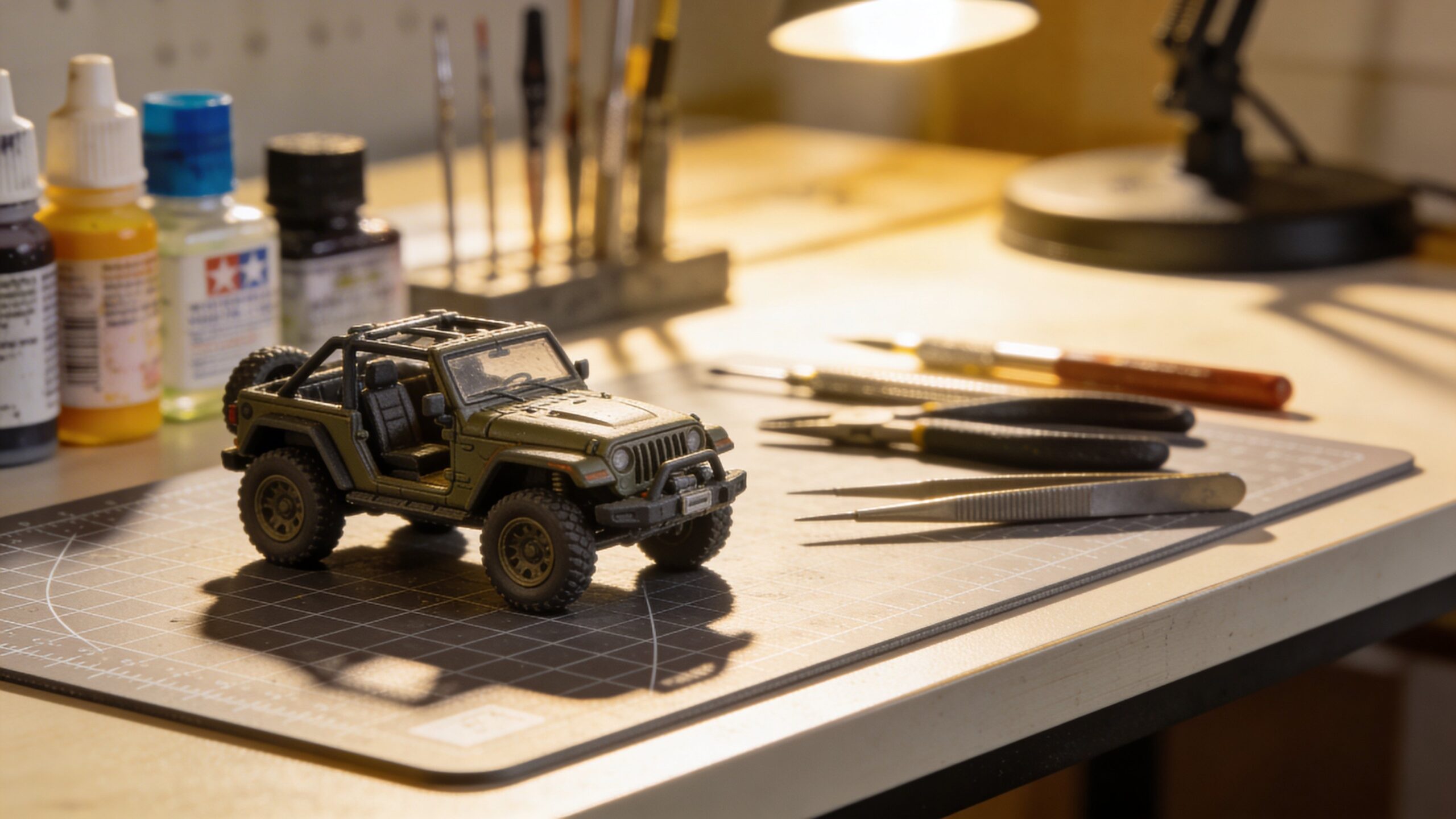
Why Hyper-Realistic Miniatures Capture So Much Attention
Hyper-realistic miniatures sit at the intersection of art, design, patience, and illusion. They fascinate people because they compress the texture and complexity of the real world into something small enough to hold in your hand, yet detailed enough to feel alive. A tiny workshop bench with chipped paint, a weathered alley with cracked pavement, or a miniature café window with subtle reflections can feel surprisingly believable when the details are handled with care. That sense of realism is what separates a simple small object from a true miniature scene that makes viewers stop and stare. For beginners, the world of miniatures can seem intimidating because the final results often look impossibly refined. The good news is that hyper-realism is not built in a single leap. It comes from stacking small decisions well. Material choice, surface texture, color layering, edge treatment, scale discipline, and lighting awareness all work together. Once you understand how those parts connect, miniature building becomes less mysterious and much more approachable.
A: Start with one small project that can be finished and reviewed.
A: Add detail after the main structure, scale, and read are working.
A: Use enough to answer form, material, style, and context questions.
A: Helpful feedback points to a clear problem and a possible next change.
A: Keep a must-have list and move extra ideas into a later version.
A: Clarity, lighting, scale, and a view that shows the strongest choices.
A: Use them when they solve a real problem, not because they look impressive.
A: Save versions before big changes and at every stable milestone.
A: Return to the original promise and fix the largest weakness first.
A: It is complete when it meets the goal clearly enough to share, play, display, or learn from.
Start with the Right Idea, Not the Most Complicated Idea
One of the biggest mistakes new builders make is choosing a project that is too ambitious too early. Hyper-realistic miniatures are impressive because they contain a lot of information, but that does not mean your first build should be a giant city block or a fully furnished multi-room structure. A better starting point is a compact scene with a clear subject, such as a small storefront corner, a workshop table, a train platform section, or a garden wall. Small scenes let you focus on realism without being overwhelmed by scale and repetition.
The best beginner project is one that has enough variety to teach important skills but not so much complexity that it becomes exhausting. A simple scene can still include wood texture, painted metal, weathered concrete, glass effects, signage shapes, and a few scattered props. In miniature building, realism is often more convincing when the composition is focused. A tightly designed scene with excellent detail feels more professional than a giant build full of unfinished surfaces and inconsistent textures.
Understanding Scale Is the Foundation of Believability
Scale is the language that holds the entire illusion together. If a door handle is too large, bricks are too thick, or furniture is oversized for the room, the viewer notices even if they cannot explain why. Hyper-realistic miniature building depends on maintaining relationships between objects. A chair must feel right next to a table. A curb must feel right next to a bicycle. A tree, lamp, crate, or window frame must all speak the same scale language or the scene loses credibility. This is why choosing a scale early matters so much. Whether you work in 1:12, 1:24, 1:35, or another common size, every decision becomes easier once that ratio is fixed. You can then build or buy accessories that match, estimate dimensions more accurately, and keep proportions consistent from start to finish. Scale discipline does not limit creativity. It actually makes creativity stronger because every detail supports the same visual world.
Build a Workspace That Supports Precision
A strong miniature workspace does more than hold your tools. It shapes the quality of your work. Good lighting is essential because shadow and visibility affect every cut, brushstroke, and glue line. A stable table, comfortable chair, cutting mat, and accessible storage system help you work longer and more accurately. Tiny parts disappear easily, so organization is not just convenient. It is part of the craft.
Clean working habits also improve results. Hyper-realistic miniatures depend on neat surfaces and controlled assembly. Dust in wet paint, fingerprints in glue, stray fibers in clear finishes, and clutter around delicate parts can all weaken the final look. A tidy workspace helps you see problems sooner and correct them before they become built-in flaws. When your environment feels intentional, your building process becomes more confident and consistent.
The Core Tools Every Builder Should Own
You do not need an enormous collection of expensive gear to start building miniatures well. A basic set of reliable tools can take you very far. A sharp hobby knife, fine tweezers, small scissors, sanding sticks, miniature files, a cutting mat, metal ruler, small clamps, and a few quality paint brushes cover most beginner needs. Add a pin vise for tiny holes, a good adhesive selection, and a magnifying lamp, and you already have a very capable setup. As your skill level grows, your tool kit can become more specialized. Airbrushes, sculpting tools, specialty weathering brushes, texture rollers, precision saws, and detail punches all expand what you can achieve. Still, the most important tool is not the most expensive one. It is control. A builder with steady habits and a small, well-understood toolkit will usually outperform a builder who owns everything but uses it without intention.
Choosing Materials That Look Real at Small Scale
Materials behave differently in miniature than they do in full-size construction. That difference matters. A real brick wall has depth, edge softness, color variation, and wear patterns that do not automatically appear when you shrink it down. Foam board, styrene sheet, balsa wood, basswood, clay, plaster, resin, and cardstock can all create convincing miniature surfaces, but they need to be chosen with scale in mind. A material that looks fine in your hand may look oversized and artificial once installed in the scene.
The secret is not always using the most expensive material. It is choosing the material whose texture can be controlled. Smooth styrene is excellent for clean architectural lines. Basswood can create believable framing or furniture. Modeling clay can help shape stone, terrain, or custom decorative elements. Fine sand, pigment powders, textured paste, and tiny scatter materials can transform flat surfaces into believable ground, concrete, or aged masonry. Hyper-realism is often built from simple materials used carefully rather than exotic materials used carelessly.
Assembly Is Where Clean Craftsmanship Begins
The realism of a miniature starts long before painting. If parts are misaligned, edges are rough, or glue marks are visible, even the best paint finish will struggle to rescue the result. Clean cutting, dry fitting, and patient assembly are essential. Before gluing anything permanently, test the placement. Look at the piece from multiple angles. Check whether the corners meet correctly and whether lines stay straight. Small errors become much more noticeable in close-up miniature photography and display. Glue choice matters as well. Fast glue is useful, but control is more important than speed. Excess glue can distort detail, leave shine, or seep into areas that should stay crisp. Many professional-looking miniatures are convincing because the builder respected the edges. Corners remain sharp where they should be sharp. Joins disappear where they should be invisible. Surfaces stay clean enough that later paint and weathering can do their job without fighting the structure underneath.
Painting for Realism Instead of Just Color
Painting a miniature is not just about making it colorful. It is about describing material, age, light, and use. A realistic painted door should not be a single flat tone. It should carry subtle variation, edge wear, shadow in recesses, and a surface quality that suggests wood, metal, or painted steel. This is what makes paint so powerful in hyper-realistic work. It turns form into believable substance.
Begin with thin, controlled coats and build the surface slowly. Primers help unify different materials and reveal flaws before final paint. Base colors establish the major tone, while glazes, washes, dry brushing, stippling, and layering create depth. Real surfaces rarely stay perfectly uniform, so slight variation is an advantage. The goal is not visual noise. The goal is controlled irregularity that feels natural. When color shifts are subtle and purposeful, the miniature starts to feel like a real object that has lived in a real environment.
Weathering Is the Shortcut to Storytelling
One of the fastest ways to make a miniature look real is to make it look used. Real environments collect dirt, fade in sunlight, chip at the edges, rust around fasteners, stain near drains, and gather dust in corners. Hyper-realistic miniature building depends on understanding these patterns and applying them with restraint. Weathering is not random decoration. It is evidence of history. Think about why an object would age the way it does. Water runs downward, so stains should follow gravity. Foot traffic wears edges and thresholds. Sun fades exposed surfaces more than sheltered ones. Metal rusts differently than painted wood peels. Concrete gathers grime differently than brick. When weathering follows logic, the viewer senses realism immediately. A miniature scene becomes more than a collection of parts. It becomes a place with memory.
Texture Is What Makes Small Things Feel Full-Sized
Realism in miniatures depends heavily on texture because texture carries scale clues. Smooth surfaces feel toy-like unless the subject is supposed to be smooth. Concrete needs tiny pitting and tonal movement. Wood needs grain, but not grain that is too deep. Fabric needs softness. Stone needs broken edges and variation. Metal needs changes in sheen, slight wear, and sometimes subtle dents or oxidation. These surface signals help the brain read the object as real even when the dimensions are tiny.
This is why experienced miniature builders spend so much time on surface development. They sand selectively, press subtle marks into clay, add texture with paste, scrape paint layers back, or dust pigment into recesses. Texture should always support the scale. Too much roughness can make the piece feel oversized and theatrical. The strongest hyper-realistic work usually uses finer texture than beginners expect, because realism often depends on subtlety rather than exaggeration.
Details Matter Most When They Are Selective
A common misconception is that hyper-realistic miniatures succeed by adding detail everywhere. In practice, the best work uses detail strategically. Real scenes have focal areas. A storefront window may be richly layered while a back wall stays quieter. A workbench may carry tiny tools, stains, and scraps, while the surrounding floor remains simpler. This contrast helps guide the eye and prevents the scene from becoming visually crowded. Selective detail also helps with time and quality. Instead of trying to make every inch equally dense, decide what the viewer should notice first. Build the strongest refinement there, then support it with convincing secondary areas. This creates a professional rhythm in the scene. The miniature feels rich without becoming chaotic, and the realism becomes easier to read because the composition has intention.
Lighting, Photography, and Presentation Complete the Illusion
A hyper-realistic miniature can be beautifully built and still feel underwhelming if it is poorly presented. Light has a huge impact on how believable a small object appears. Harsh overhead light can flatten detail, while soft directional light can emphasize texture, depth, and atmosphere. Even if the miniature is not permanently lit, thinking about light while building will improve paint choices, contrast balance, and composition.
Photography is especially important because miniatures are often shared online before they are seen in person. Camera angles that match real-world height make scenes feel larger and more believable. Shallow depth of field can create cinematic mood, but too much blur may reveal the scale instead of hiding it. A clean display base, protective cover, or thoughtful backdrop can also elevate the finished piece. Presentation is not an afterthought. It is part of the realism.
How Beginners Become Advanced Builders
Progress in miniature building does not come from rushing into harder projects. It comes from repetition, observation, and better decision-making. Each build teaches something valuable. One project may improve your painting discipline. Another may teach you how to create cleaner corners, more convincing rust, or better scene composition. Improvement compounds over time. The builder who keeps studying real surfaces and refining technique will steadily close the gap between beginner work and professional-looking results. The most advanced miniature artists are usually the ones who remain curious. They study architecture, aging materials, photography, interior design, weather patterns, and industrial wear. They pay attention to how reality behaves, then translate those observations into scale. That mindset is what truly transforms a builder. Hyper-realistic miniatures are not just made with tools and paint. They are made with observation, patience, and the willingness to keep seeing more than the average eye notices.
Final Thoughts: Start Small, Build Carefully, Keep Improving
Building hyper-realistic miniatures is one of the most satisfying creative disciplines because it rewards both imagination and discipline. It allows you to invent worlds, preserve scenes, recreate architecture, and tell stories through texture, color, and scale. You do not need to begin with expert skills. You only need a manageable project, a clear sense of scale, a few dependable tools, and the patience to care about the small things that others might overlook.
The path from beginner to pro is not hidden behind special talent. It is built through careful practice. Every clean cut, every improved paint layer, every more believable texture, and every better weathering choice moves your work forward. Start with one scene, make it as convincing as you can, and let that process teach you what to build next. In miniature work, the smallest improvements often create the biggest leaps in realism.